Home / Plastering
Plastering in Barnsley
Skimming, full re-plastering and ceilings for single rooms or whole houses, left flat, square and ready for paint.
Plastering work we take on
Skimming
A new finish over tired but solid walls, over fresh plasterboard, or after wallpaper has come off and taken the surface with it.
Full re-plaster
Loose, crumbling or damp-damaged plaster hacked off to the masonry and replaced with base coat and finish.
Ceilings
Sagging lath and plaster, cracked board joints and textured coatings. Overboarded, replaced or skimmed, whichever the ceiling needs.
Boarding and dry lining
Plasterboard on studwork or fixed to masonry, with insulated board on cold outside walls if you want it.
After other trades
Making good after a rewire, new heating, a damp-proof course or a knocked-through wall, so the room can be decorated.
Lime plaster
For stone-built houses whose walls need to let moisture out. Slower than gypsum, and the right choice where damp keeps coming back.
Media walls and chimney breasts
A media wall is a boxed-out section of wall with a recess for the television and often an electric fire underneath. Getting one to look built-in comes down to the plastering: crisp edges on every recess, flat faces and corners that are properly square.
We also re-form old chimney breasts, open up or close off fireplaces, and add alcove shelving either side, all skimmed in with the rest of the room so there are no visible joins.
Both photos here were taken straight after skimming, which is why the plaster is dark. It dries to pale pink over the following days.
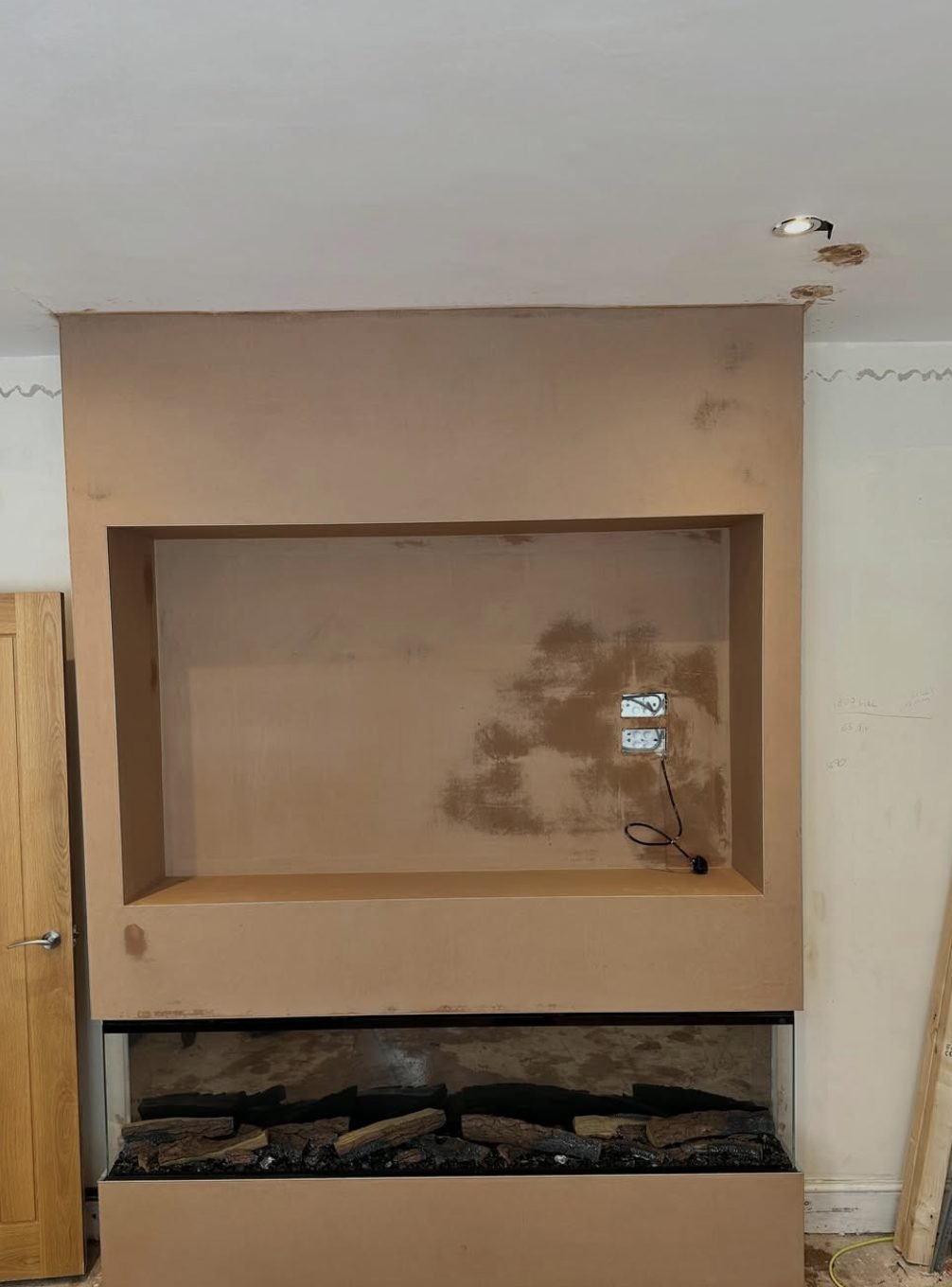
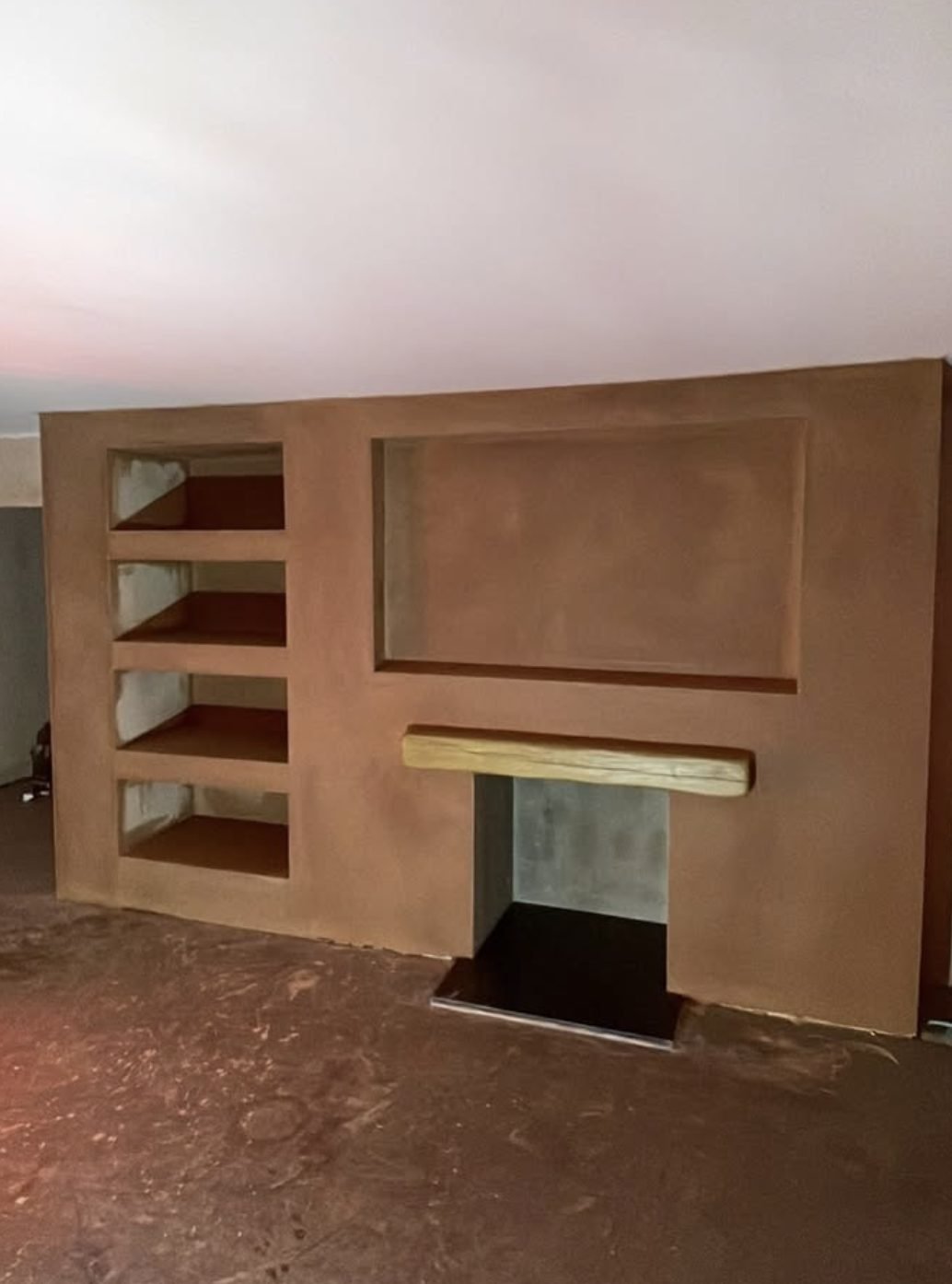
A plastering job from start to finish
Look and price
We check the walls for hollow or damp areas, measure up and give you a written price.
Cover and clear
Floors down, furniture sheeted, fittings loosened. Anything loose on the wall comes off.
Prepare the surface
Old plaster is sealed or bonded so the new coat sticks. Board joints are taped. Corners get beads.
Plaster
Base coat first where needed, then two passes of finish, trowelled up as it sets until it is smooth and flat.
Clean up
Sheets up, floors swept, waste taken with us. We tell you when the room can be painted.
Drying and decorating
New plaster changes colour as it dries. Use the colour, not the calendar, to judge when it is ready.
Dark brown-pink
Wet. Leave it alone. Keep the room aired and do not hang anything on the wall.
Patchy
Drying from the edges inward. Dark patches near the floor or in corners are normal and go last.
Even pale pink
Dry. Start with a mist coat of watered-down matt emulsion, then your normal coats on top.
Plastering questions
What is the difference between skimming and re-plastering?
Skimming is a thin finish coat, two to three millimetres, over a surface that is already flat and sound. Re-plastering means taking failed plaster off back to the brick or stone and building it up again with a base coat before the finish. Skimming is quicker and cheaper, but it only works if what is underneath is solid.
Do I need to strip the wallpaper first?
Yes, wallpaper has to come off before plaster goes on. You can do it yourself to save money, or we can include it in the price. Once the paper is off we can see what the wall is really like, and now and then that changes the plan.
Can you save a lath and plaster ceiling?
Sometimes. If it is cracked but still firmly keyed to the laths, it can often be overboarded and skimmed, which keeps the mess down. If it has dropped or is coming away, it is safer to take it down and board afresh. We check from the loft where we can.
How long does it take to skim a room?
An average bedroom or living room, walls and ceiling, is usually a day's work for skimming once it is prepared. A full re-plaster takes longer because the base coat has to set before the finish goes on.
Can I stay in the house while it is done?
Yes. We do a room or two at a time so you always have somewhere to be. The room being plastered is out of use that day, and it is best left alone with the door shut and a window ajar for a few days after.
Should I put the heating on to dry the plaster faster?
Normal background heating is fine. Do not point heaters or a dehumidifier at new plaster, because drying it too quickly makes it crack or lose its bond. Steady air movement does the job better than heat.
Get a plastering price
Which rooms, and walls, ceilings or both?
One room or the whole house?
Either is fine. Ring and tell us what you have in mind.