Home / Rendering
External rendering in Barnsley
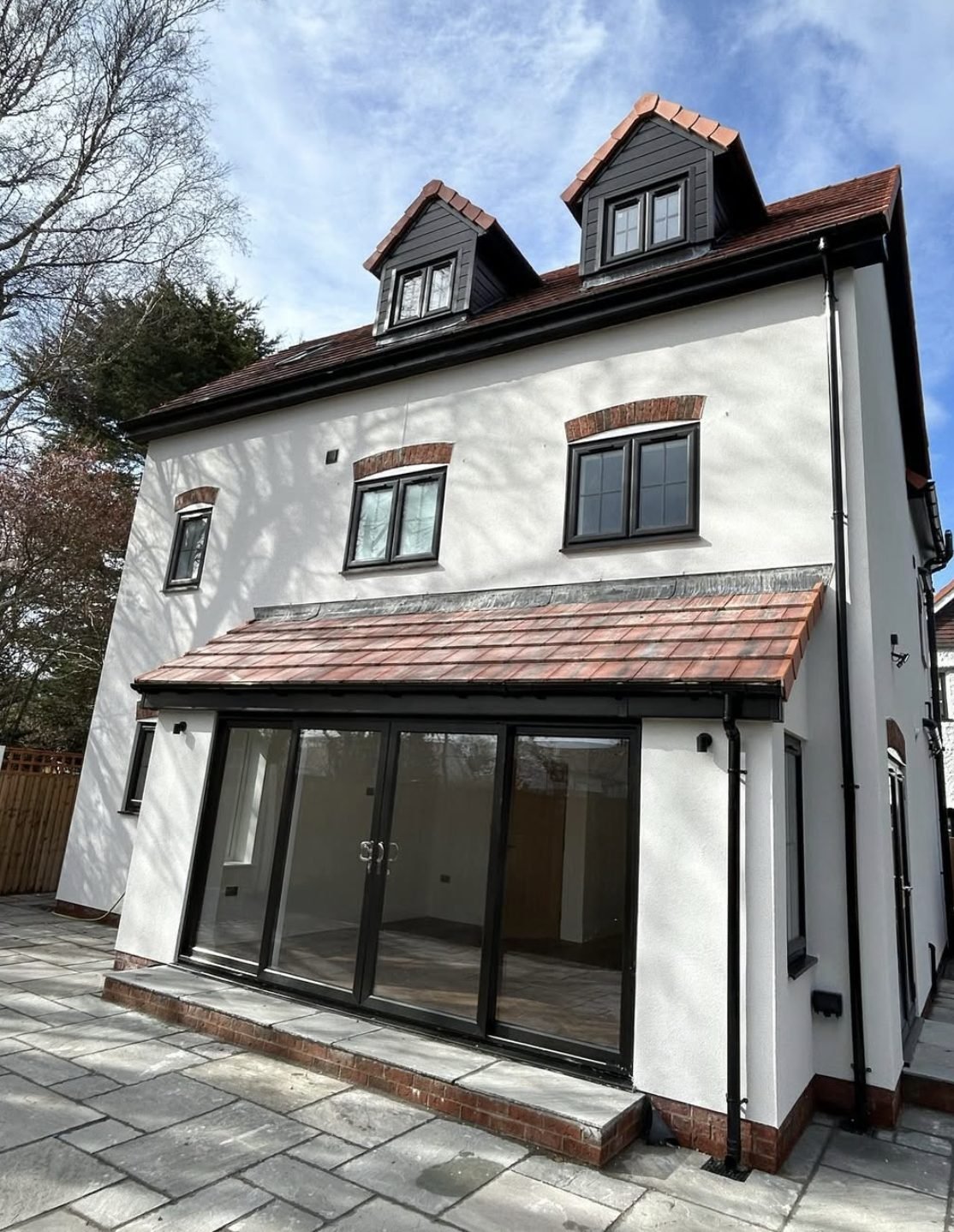
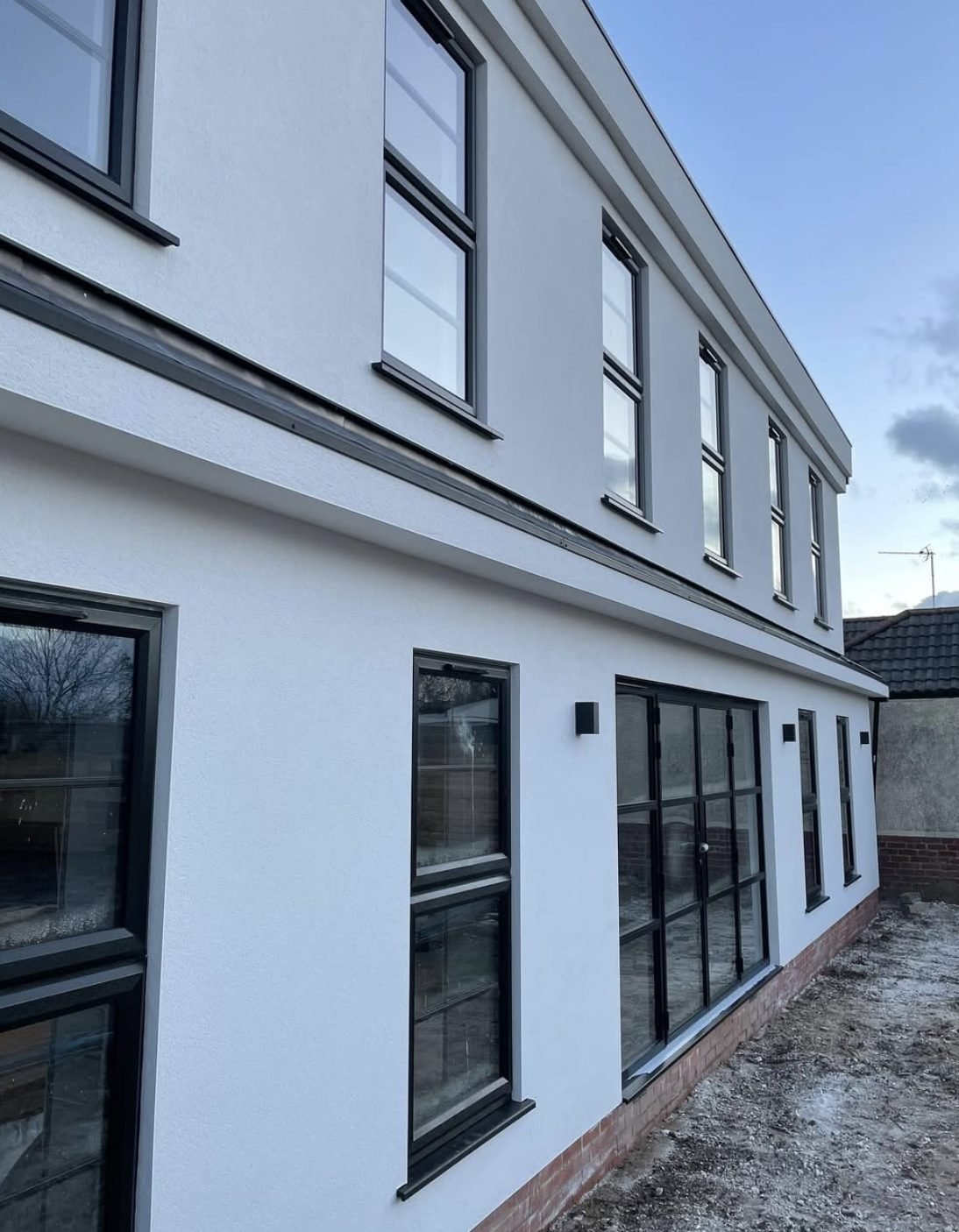
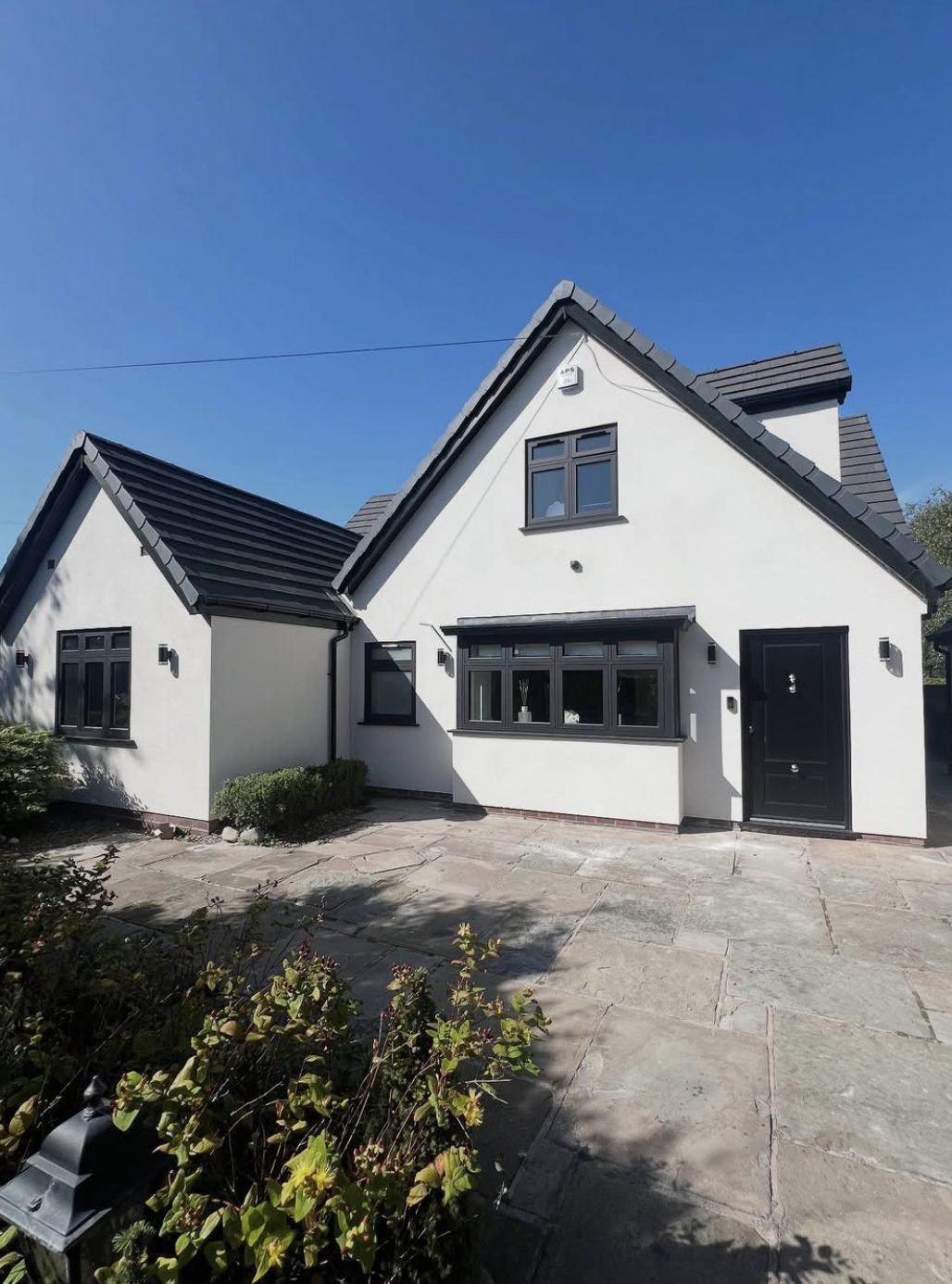
New render for houses, gable ends and extensions, and a smooth finish over old pebbledash. Built to stand up to South Yorkshire weather.
Choosing a render
There are four systems we use. Which one goes on your house depends on what the wall is built from and how exposed it is.
Silicone
A thin coloured top coat over a meshed base. Flexible, water-shedding and slow to go green. Suits most brick and block houses and is the usual choice over pebbledash.
Monocouche
One thick coloured coat, scraped to a fine even texture. Good on new blockwork and large plain walls.
Sand and cement
Traditional scratch coat and float coat, painted afterwards. Hard-wearing and the easiest to match into existing render.
Lime
For solid stone. It breathes, flexes a little with the building and can be limewashed or left natural.
Pebbledash and roughcast
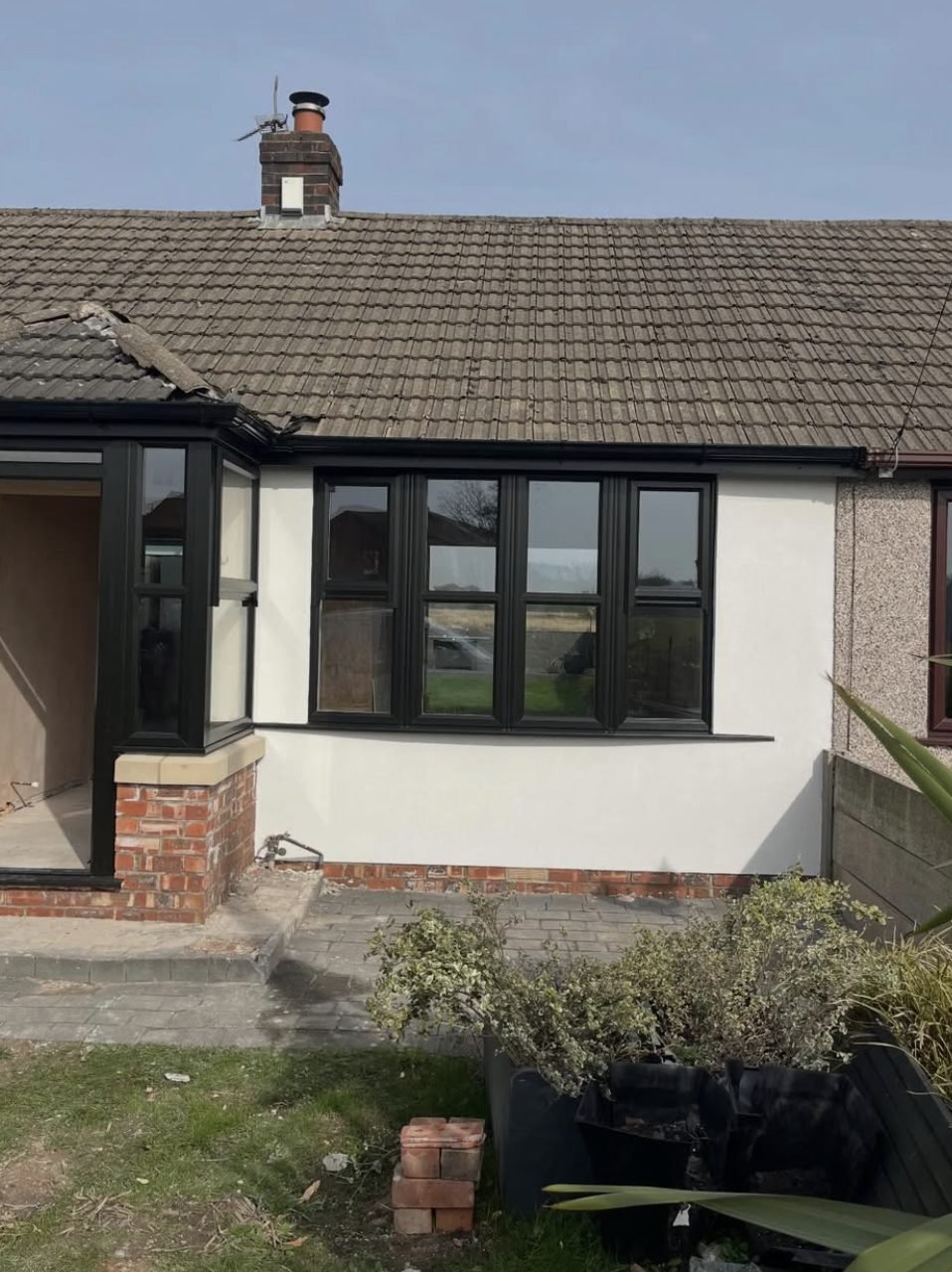
A lot of Barnsley's semis and bungalows were finished in pebbledash or roughcast. After seventy or eighty years it is often cracked, stained or shedding stones, and many owners simply want rid of the look.
In most cases it does not need stripping. We test how well it is stuck by knocking on it. Where it rings solid, a base coat fills the texture, mesh goes over the top and a smooth coloured finish follows. Where it sounds hollow, that section is cut out and filled first.
If more is loose than sound, we take the whole lot back to brick and start again. You will know which it is before you get a price, because we do the test at the first visit.
How a rendering job goes
Visit and quote
We check the walls, gutters and ground level, talk through systems and colours, and send a written price with scaffold included.
Scaffold
Erected by a scaffolding firm a day or two before we start.
Mask and prepare
Windows, doors and paths are covered. Loose material is removed and repairs are made.
Beads
Fixed at corners, around openings and along the bottom edge to give straight lines and shed water.
Base coat and mesh
The layer that gives strength and stops cracks. Extra mesh goes at the corners of windows and doors.
Top coat
Applied a full wall at a time and finished to an even texture.
Cure and clear
Masking off, pipes and fittings back on, scaffold down and the site left clean.
The parts of a house that fail first
If you are only doing some of the house, these are the places where render does the most good.
Gable ends
Tall, flat and facing the weather. A gable that soaks up rain makes the bedroom behind it cold and damp.
Chimney stacks
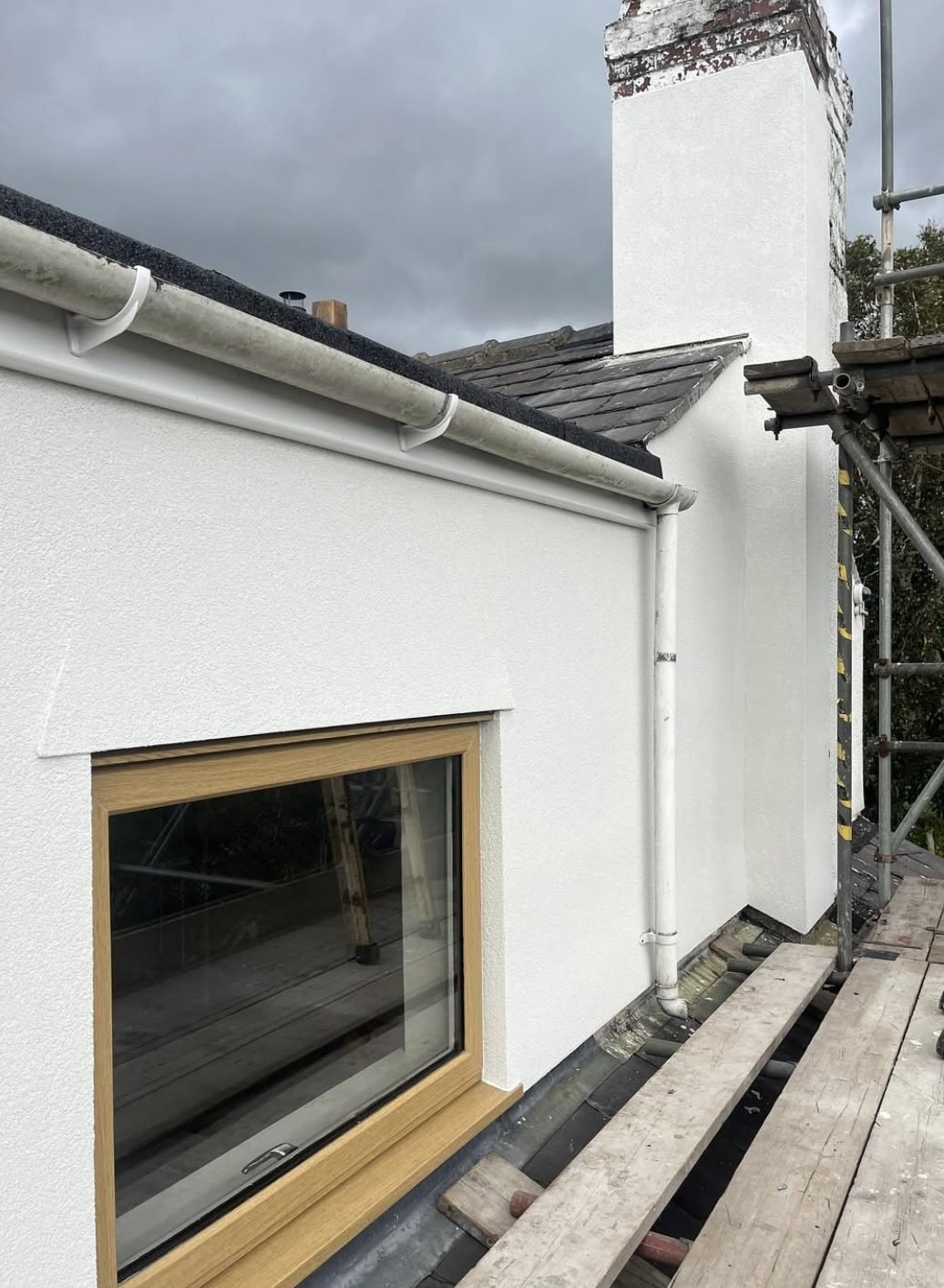
Exposed on every side and rarely looked at. Worth doing whenever a scaffold is already up.
Rear offshots
Single-skin kitchens and bathrooms on the back of terraces, often the dampest part of the house.
Rendering questions
Which render lasts longest?
Any of the systems will last for decades if it suits the wall and is put on properly. Silicone render stays cleaner and resists cracking best. Sand and cement is tough but relies on its paint. On a solid stone wall, lime will outlast both because it does not trap water.
Can you render over pebbledash?
Yes, provided the pebbledash is still bonded to the wall. We knock on it across the whole elevation. Solid areas are levelled with a meshed base coat and finished. Hollow areas are taken off first. If most of it is loose, it all comes off.
Do I need planning permission to render my house in Barnsley?
For most houses outside a conservation area it is not normally required, but the rules have conditions, and listed buildings always need consent. Villages such as Cawthorne and Elsecar have conservation areas. Check with Barnsley Council planning before you commit, and we can describe the proposed finish for you in writing.
My house is on an exposed hillside. Does that matter?
It does. Up towards Penistone and on west-facing gables the rain is driven hard against the wall. We allow for that with the right system, proper drip details over windows and at the base, and sealed joints around every opening.
How long does rendering a house take?
A typical semi takes around a week to ten days from scaffold up to scaffold down, weather allowing. Terraced fronts are quicker. Detached houses and jobs with a lot of preparation take longer. Your quote gives the expected dates.
What colour should I choose?
White and cream are the most popular, with greys close behind. Look at your roof tiles, window frames and the houses either side, then hold our sample boards against the wall outdoors. Colours look different in daylight than on a chart.
Get a rendering price
Whole house, or just certain walls?
Thinking about rendering?
We will look at the walls and tell you what would suit them.